
Best Hospitality Recruitment Software for High-Volume Hotel Hiring in 2026
Hospitality hiring has always moved fast, but in 2026, hotel teams are under even more pressure to fill roles quickly without lowering standards. Between seasonal demand, multi-property coordination, and ongoing hospitality staff shortage challenges, hiring managers need more than a basic ATS. They need hospitality recruitment software built for speed, structure, and scale.
For hotels, resorts, and hospitality groups handling high volume hiring, the right platform can do much more than collect applications. It can automate screening, organize interviews, improve response times, and help teams reduce time to hire across dozens or even hundreds of roles. That matters when open positions directly affect guest experience, service quality, and revenue.
This guide breaks down what to look for in recruitment software for hospitality, where generic tools fall short, and how modern hospitality hiring software can help hotel teams hire faster and more consistently.
Why Hotel Hiring Needs Specialized Hospitality Recruitment Software
Hospitality recruiting is different from hiring in many other industries. The volume is higher, the urgency is greater, and the role mix is broader. A hotel may need to hire front desk staff, housekeepers, food and beverage teams, maintenance workers, guest relations staff, and supervisors at the same time.
That creates a few common problems:
- Too many applications to review manually
- Slow coordination between HR and on-site managers
- Inconsistent candidate screening across locations
- Delays in interview scheduling and follow-up
- Lost candidates due to long response times
This is exactly where hospitality recruitment software becomes valuable. Instead of relying on spreadsheets, inboxes, or disconnected hiring tools, teams can centralize the full process in one system. For high-volume hotel hiring, that shift is often the difference between reactive recruiting and a repeatable hiring workflow.
What Makes the Best Recruitment Software for Hospitality Teams
Not every hiring platform is designed for hospitality. The best hospitality hiring platform should reflect the realities of hotel recruiting: fast-moving roles, repeat hiring cycles, large applicant pools, and multiple stakeholders involved in decision-making.
Fast application flows for frontline roles
Most hotel candidates will not spend 20 minutes filling out a long application. Frontline hiring works best when the process is simple, mobile-friendly, and easy to complete quickly.
The best hiring software for hospitality should support short application flows, clear job pages, and minimal friction. This helps hotels capture more candidates before they drop off.
Automation for repetitive hiring tasks
High volume hiring creates a lot of repetitive work: screening applicants, sending updates, moving candidates through stages, and scheduling interviews. Manual handling slows everything down.
Strong hospitality hiring software should include hiring automation for routine steps so recruiters can focus on quality, not admin. That is especially useful when a hotel group is opening a new property, hiring for peak season, or replacing frontline staff at scale.
Multi-location hiring visibility
A single-property business may be able to manage hiring with basic tools. A hotel group cannot. Multi-property hiring requires clear oversight across roles, locations, and hiring stages.
A strong hospitality hiring platform should give central teams visibility into every role while still allowing local managers to participate. That balance is important for speed and accountability.
Better shortlisting with AI support
When hundreds of applications come in for similar roles, manual review becomes a bottleneck. This is where AI recruitment software can create real operational value.
Used well, AI can help identify qualified applicants, rank candidates based on job criteria, and create more structured shortlists. That does not replace human hiring decisions. It helps teams get to the right candidates faster and with more consistency.
Candidate communication and interview coordination
Hospitality hiring often breaks down in follow-up. Candidates apply, wait too long, and move on. Managers miss updates. Interviews take too long to arrange.
Good hotel hiring software should make communication easier through automated updates, status tracking, and interview scheduling workflows. Faster communication improves the candidate experience and reduces drop-off.
Reporting that helps reduce time to hire
If a hotel wants to improve hiring outcomes, it needs visibility into where delays happen. The best recruitment software for hospitality should show metrics such as application volume, screening speed, interview conversion, and time-to-fill by location or role type.
That kind of reporting helps teams reduce time to hire in a measurable way instead of guessing where the process is broken.
Key Use Cases for Hospitality Hiring Software in 2026
The value of hospitality recruitment software becomes even clearer in specific hotel hiring scenarios.
Seasonal hiring surges
Hotels often need to ramp hiring quickly before peak travel periods, holiday demand, or event-heavy seasons. In these moments, the challenge is not just finding candidates. It is processing them fast enough.
A system with automation, shortlisting support, and structured workflows makes seasonal hiring much more manageable.
Multi-property hotel groups
When one team oversees hiring for several hotels, consistency becomes a challenge. Different managers may use different criteria, response times, and processes.
A centralized hospitality hiring platform helps standardize hiring without removing flexibility from local teams.
High-turnover frontline recruiting
Roles such as housekeeping, kitchen support, and service positions can require continuous recruiting. In that environment, speed matters as much as sourcing.
The right hospitality hiring software helps teams build repeatable pipelines, reopen roles quickly, and reduce the administrative burden of constant hiring.
Centralized hiring with local managers
Many hotel businesses want HR to manage process and compliance while allowing local property managers to make final decisions. That only works well when both sides can collaborate inside one platform.
This is where structured workflows, stage visibility, and permission-based collaboration make a major difference.
Why Generic Hiring Tools Often Fall Short in Hospitality
Many companies start with general ATS platforms or disconnected hiring tools. That may work for low-volume office recruiting, but hospitality has different requirements.
Generic systems often create issues like:
- Overly long applications for frontline jobs
- Limited automation for bulk hiring
- Weak collaboration across multiple properties
- Poor support for large candidate volumes
- Minimal structure for fast shortlisting
In other words, they were not built for the pace of hotel recruiting.
Hospitality businesses need recruitment software for hospitality that supports constant movement: fast applications, fast screening, fast communication, and fast decisions. Without that, open roles stay open longer and hiring teams spend more time managing process than filling jobs.
How SorsX Supports High-Volume Hotel Hiring
For hospitality teams looking for a more structured approach, SorsX fits well as a modern hospitality recruitment software option.
Instead of acting as just another applicant database, SorsX supports the full hiring workflow with AI-assisted screening, interview coordination, candidate shortlisting, and process automation. That is particularly useful for hotel groups that need to manage large applicant volumes without losing visibility or control.
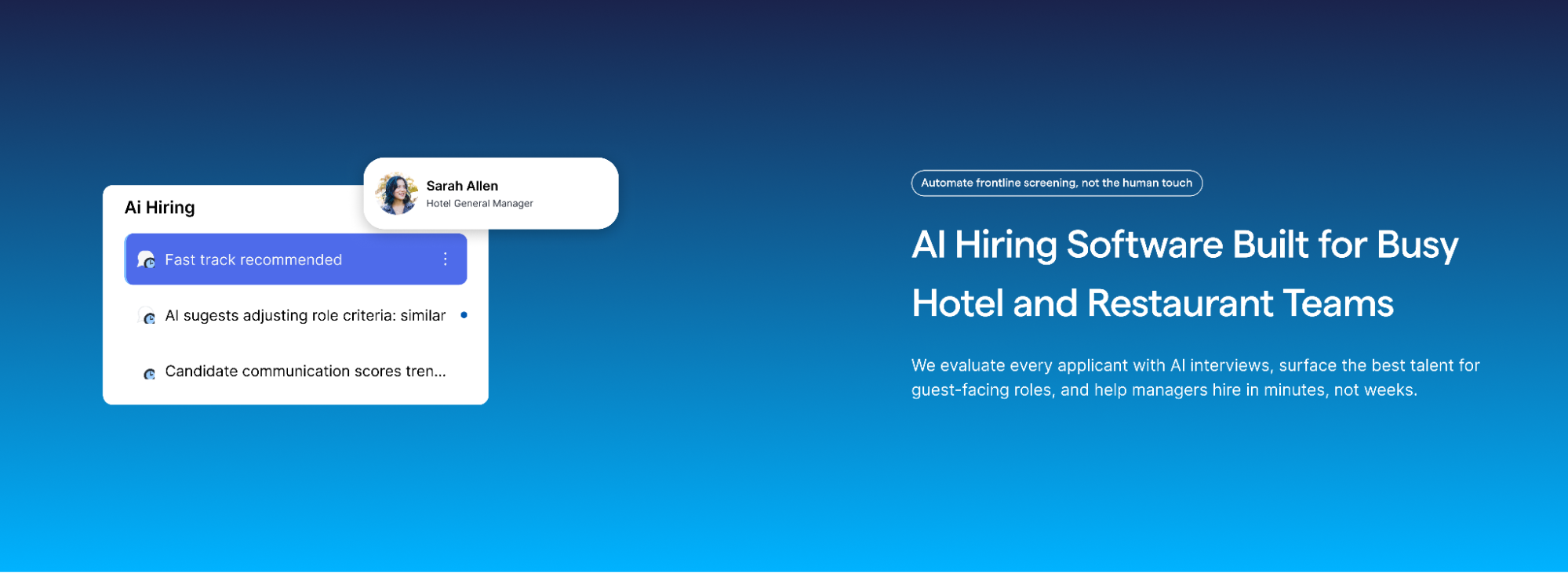
For high-volume hotel hiring, SorsX can help teams:
- Screen applicants faster with structured criteria
- Automate repetitive hiring tasks
- Coordinate recruiters and hiring managers in one workflow
- Build shortlists more efficiently
- Improve consistency across roles and locations
- Move qualified candidates through the funnel faster
That makes it relevant not only as hospitality hiring software, but also as part of a broader move toward smarter AI hiring tools for operations-heavy teams.
How to Choose the Right Hospitality Hiring Platform
If you are evaluating hospitality recruitment software in 2026, focus on operational fit, not just feature lists.
Start with these questions:
- Can the platform support high volume hiring without slowing down recruiters?
- Is the application experience simple enough for frontline hospitality roles?
- Does it help recruiters and managers collaborate across properties?
- Can it automate screening, communication, and interview workflows?
- Does it provide reporting that helps improve hiring speed over time?
- Can it scale with seasonal hiring or expansion plans?
The right platform should feel like a workflow advantage, not another system your team has to manage manually.
For many hotel businesses, the strongest option will be one that combines hiring automation, AI-assisted screening, and practical collaboration tools in a way that fits real recruiting pressure on the ground.
Final Thoughts
The best hospitality recruitment software is not just software that stores candidates. It is software that helps hotel teams hire at the speed their business requires.
In 2026, that means choosing tools built for hospitality realities: high applicant volume, urgent openings, multi-location coordination, and the need to reduce time to hire without sacrificing candidate quality. Whether you are hiring for one hotel or scaling across a portfolio, specialized hospitality hiring software can make the process faster, more consistent, and easier to manage.
As hospitality staff shortage pressures continue, the teams that invest in better hiring systems will be in a stronger position to attract talent, fill roles faster, and protect service quality across every property.
If your team is hiring across multiple hotel roles or properties, explore how SorsX helps hospitality businesses automate screening, streamline interviews, and build better shortlists for high-volume hiring.